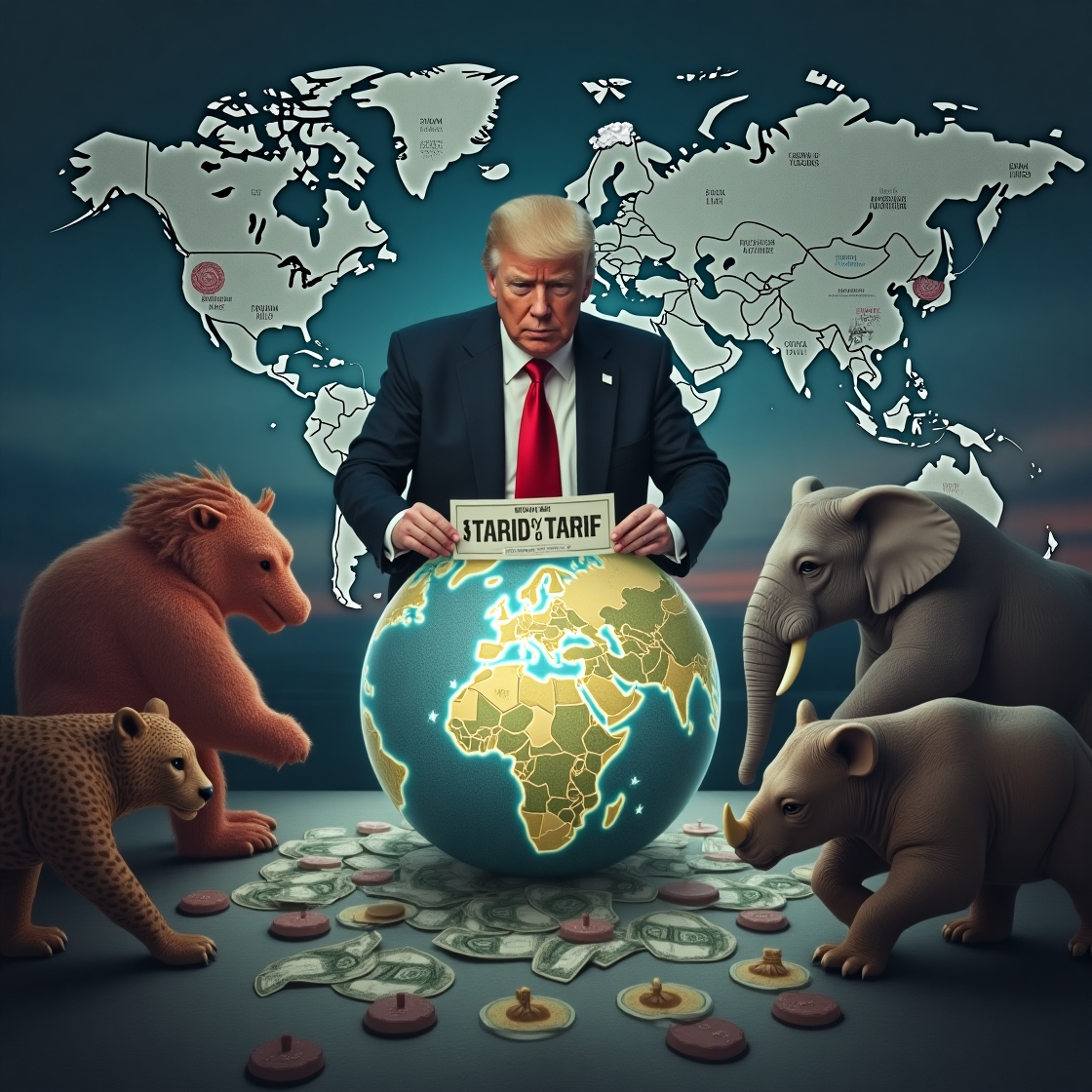
In a dramatic turn that could reshape the global financial order, economists are warning that the United States’ proposed tariffs on BRICS nations may backfire, intensifying the global trend of de-dollarization and strengthening alternative financial systems. As the Biden-Trump tariff debate heats up in Washington, the international community—particularly the BRICS bloc—is responding with strategic economic recalibration.
The Looming Tariff Plan and Its Implications
According to economist Igbal Guliyev of MGIMO University, a proposed 10% tariff on BRICS countries, recently announced by former U.S. President Donald Trump, may severely undercut Washington’s long-standing global economic leadership. Guliyev, speaking to Russia’s Tass news agency, emphasized that the move is far more than a simple trade dispute—it signals a deeper geopolitical and economic shift.
“The BRICS countries are rapidly forming a parallel architecture in the financial, technological, and institutional areas, thereby challenging the existing status quo and the dominance of the dollar,” Guliyev said.
Rather than deterring or isolating the BRICS alliance—Brazil, Russia, India, China, and South Africa—this tariff threat may act as a catalyst for further cooperation among these nations. The collective response is expected to be not only retaliatory but also strategically aligned to reduce reliance on the U.S. dollar and the Western-led financial system.
A Parallel System in the Making
Indeed, efforts by BRICS nations to build a parallel financial infrastructure have been underway for years. But the renewed tariff threats from Washington appear to be accelerating these plans. From experimenting with alternative payment systems to reducing dependency on SWIFT, BRICS countries are pursuing deeper integration that could culminate in a robust rival system for global trade and finance.
China, for example, has publicly condemned the proposed tariffs as economic coercion, signaling a firm stance against what it sees as unfair economic pressure. Simultaneously, all BRICS nations are expanding trade in local currencies and exploring mechanisms for independent international settlements—steps that directly challenge dollar hegemony.
Guliyev argues that such developments are ushering in a new era of multipolarity: “The world is entering a period of turbulence, where non-economic factors will increasingly determine the economic future.”
The Geopolitical Undercurrents
This economic shift comes amidst rising geopolitical tensions between Western powers and a resurgent Global South. The BRICS alliance, now in expansion mode with new members like Iran and Egypt, represents a significant portion of the world’s population and natural resources. Their push toward a de-dollarized system could reduce the strategic leverage the U.S. has long enjoyed through dollar-based trade and financial institutions.
Yet, not all BRICS leaders view the group’s actions as inherently anti-American. Russian Deputy Foreign Minister Sergey Ryabkov recently addressed concerns about BRICS’ intentions, stating, “Nothing on the BRICS agenda contains an anti-American component.” He emphasized the need for diplomacy over economic confrontation, urging the U.S. to pursue dialogue instead of unilateral threats.
A Turning Point for the Global Economy?
The clash between Washington’s protectionist impulses and BRICS’ ambitions may mark a historical turning point. As more nations begin to question the reliability and fairness of a U.S.-dominated system, the shift toward a multipolar, de-dollarized global economy could accelerate.
If the U.S. proceeds with these tariffs, it may inadvertently empower its strategic rivals, pushing them to fast-track the development of independent economic systems. In doing so, America risks losing one of its most potent tools of global influence: the dollar.
In short, the very policies intended to reinforce U.S. economic strength could become the catalyst for its decline on the global stage—opening the door to a new and uncertain financial order.
Ready to start your cryptocurrency journey?
If you’re interested in exploring the world of crypto trading, here are some trusted platforms where you can create an account:
- Binance – The world’s largest cryptocurrency exchange by volume.
- Bybit – A top choice for derivatives trading with an intuitive interface.
- OKX – A comprehensive platform featuring spot, futures, DeFi, and a powerful Web3 wallet.
- KuCoin – Known for its vast selection of altcoins and user-friendly mobile app.
These platforms offer innovative features and a secure environment for trading and learning about cryptocurrencies. Join today and start exploring the opportunities in this exciting space!
 Want to stay updated with the latest insights and discussions on cryptocurrency?
Join our crypto community for news, discussions, and market updates: CryptoBCC on Telegram.
 For collaborations and inquiries: CryptoBCC.com@gmail.com
Disclaimer: Always do your own research (DYOR) and ensure you understand the risks before making any financial decisions.