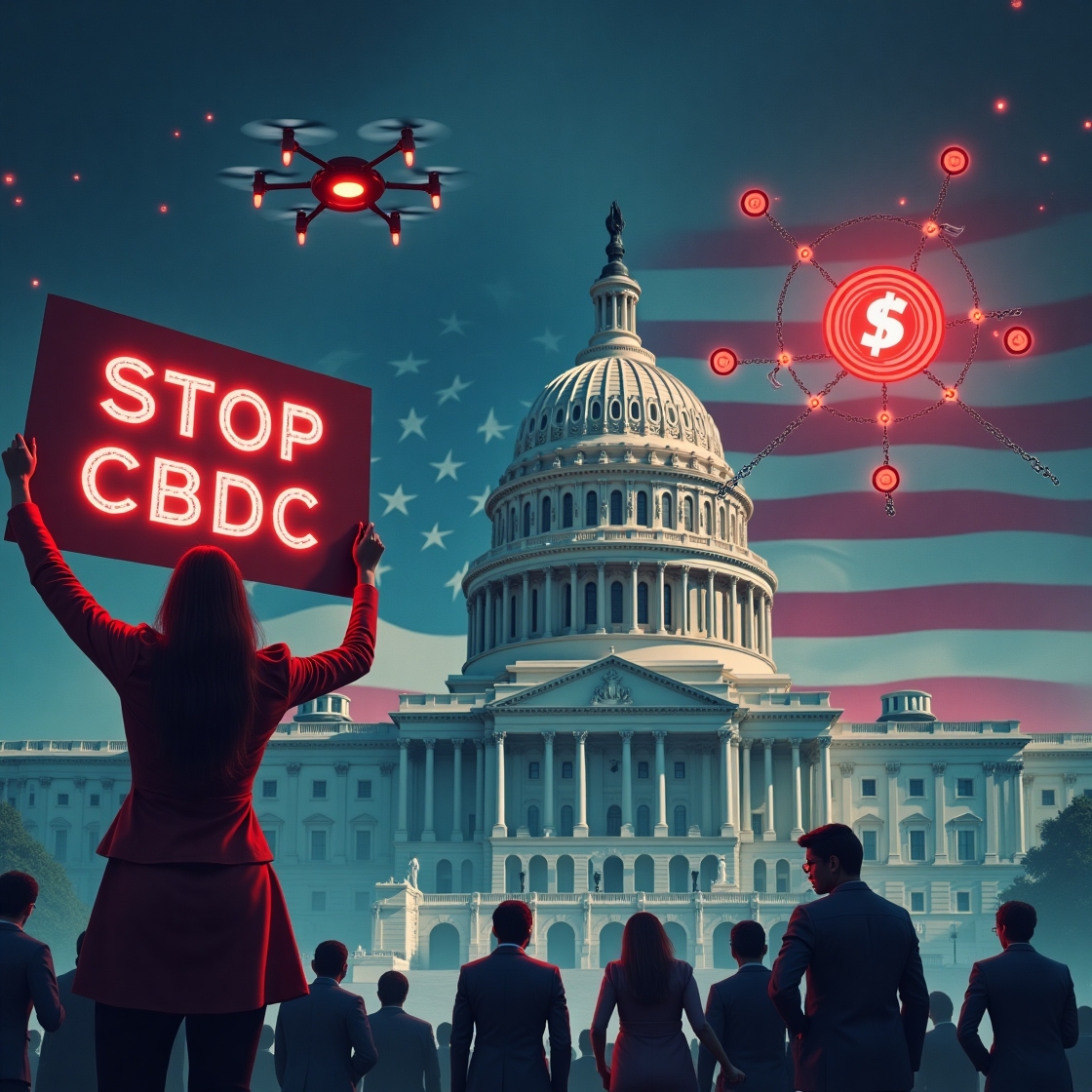
A new bill in the United States—officially known as the GENIUS Act—is drawing intense criticism from both crypto experts and lawmakers, who warn it could serve as a covert path toward a centralized Central Bank Digital Currency (CBDC). While positioned as a legal framework to regulate stablecoins, opponents argue the act introduces sweeping financial surveillance powers, undermining privacy, decentralization, and financial freedom—core tenets of the cryptocurrency movement.
🚨 What is the GENIUS Act and Why Is It So Controversial?
The GENIUS Act (Guaranteeing Effective National Infrastructure for U.S. Stablecoins) is a proposed U.S. bill that aims to establish regulatory standards for stablecoins, digital currencies pegged to traditional assets like the U.S. dollar. However, critics like U.S. Congresswoman Marjorie Taylor Greene say it masks a broader agenda.
“This bill pretends to regulate stablecoins, but in reality, it opens the backdoor to a fully centralized CBDC,” Greene warns.
According to the proposed legislation, the government would gain broad authority to track, monitor, and control stablecoin transactions, raising fears of excessive financial surveillance and loss of user autonomy.
🔍 The Risks: Financial Oversight & Erosion of Privacy
A major concern lies in the Act’s strict AML (Anti-Money Laundering) and KYC (Know Your Customer) requirements. Stablecoin issuers would be mandated to comply with deep transaction monitoring protocols and potentially suspend user payments without public justification.
“Controlling stablecoins means controlling all digital transactions—effectively mimicking the centralized control of a CBDC,” warns Jean Rausis, co-founder of Smardex.
This level of oversight could lead to a scenario where every transaction is surveilled, identities are logged, and payments can be restricted at the discretion of authorities.
🧠 Experts Sound the Alarm
Prominent voices in the crypto and economic world are joining the chorus of concern.
Saifedean Ammous, economist and author of The Bitcoin Standard, criticized the bill:
“The U.S. dollar is already functioning like a government-issued digital token with extensive oversight. The GENIUS Act simply strengthens this control.”
He emphasized that any move to regulate stablecoins like government-controlled assets undermines the very foundation of cryptocurrency: decentralization, privacy, and autonomy.
⚖️ Comparing the GENIUS Act to Global CBDC Models
| Criteria | GENIUS Act (U.S.) | CBDC (China, EU) | Unregulated Stablecoins |
|---|---|---|---|
| Transaction Surveillance | Full tracking & data collection | Centralized monitoring | Minimal tracking, decentralized |
| AML/KYC Requirements | Mandatory & strict | Mandatory & strict | Optional or loosely enforced |
| Privacy Protections | Susceptible to suspension & intervention | Government-controlled, low privacy | High privacy & user autonomy |
Experts caution that if passed, the GENIUS Act could push the U.S. toward a digital financial framework similar to China’s or the EU’s, where privacy is significantly curtailed in favor of state control.
🔊 Crypto Community Reacts
The crypto community has responded with a mix of alarm and activism. Many fear that if passed, the GENIUS Act would not only stifle innovation but also reshape the future of digital assets in the U.S. by centralizing control under federal authorities.
“The bill threatens to reduce the U.S. crypto ecosystem into a permissioned environment—one that’s antithetical to everything this technology stands for,” one industry insider said.
📌 Frequently Asked Questions (FAQ)
Is the GENIUS Act effectively a path to CBDC?
While the bill doesn’t explicitly introduce a U.S. CBDC, critics argue its mechanisms closely resemble centralized digital currency controls, laying the groundwork for one.
Why is the crypto industry opposing it?
Because the bill mandates full transaction transparency, invasive data collection, and allows for arbitrary suspension of transactions, it threatens decentralization, innovation, and user privacy.
What are the privacy risks?
The Act’s stringent KYC/AML rules and broad enforcement powers could lead to widespread financial surveillance—similar to current CBDC practices in China and the EU.
How might this impact innovation?
By increasing compliance burdens and introducing regulatory uncertainty, the Act may discourage entrepreneurs and developers, limiting U.S. leadership in Web3 and blockchain technology.
🔮 Looking Ahead: Will the U.S. Embrace a CBDC Model?
Though positioned as a stablecoin regulatory framework, many fear the GENIUS Act may become a stepping stone toward a U.S. CBDC, with central authorities exercising sweeping control over digital payments. If passed in its current form, it could signal a major shift in U.S. financial policy, pushing the country closer to a tightly monitored, centrally controlled digital economy—a future crypto advocates have long sought to avoid.
🧠 The debate is far from over. Will the U.S. protect digital financial freedom or trade it for central oversight? The answer may lie in the fate of the GENIUS Act.
Ready to start your cryptocurrency journey?
If you’re interested in exploring the world of crypto trading, here are some trusted platforms where you can create an account:
- Binance – The world’s largest cryptocurrency exchange by volume.
- Bybit – A top choice for derivatives trading with an intuitive interface.
- OKX – A comprehensive platform featuring spot, futures, DeFi, and a powerful Web3 wallet.
- KuCoin – Known for its vast selection of altcoins and user-friendly mobile app.
These platforms offer innovative features and a secure environment for trading and learning about cryptocurrencies. Join today and start exploring the opportunities in this exciting space!
 Want to stay updated with the latest insights and discussions on cryptocurrency?
Join our crypto community for news, discussions, and market updates: CryptoBCC on Telegram.
 For collaborations and inquiries: CryptoBCC.com@gmail.com
Disclaimer: Always do your own research (DYOR) and ensure you understand the risks before making any financial decisions.