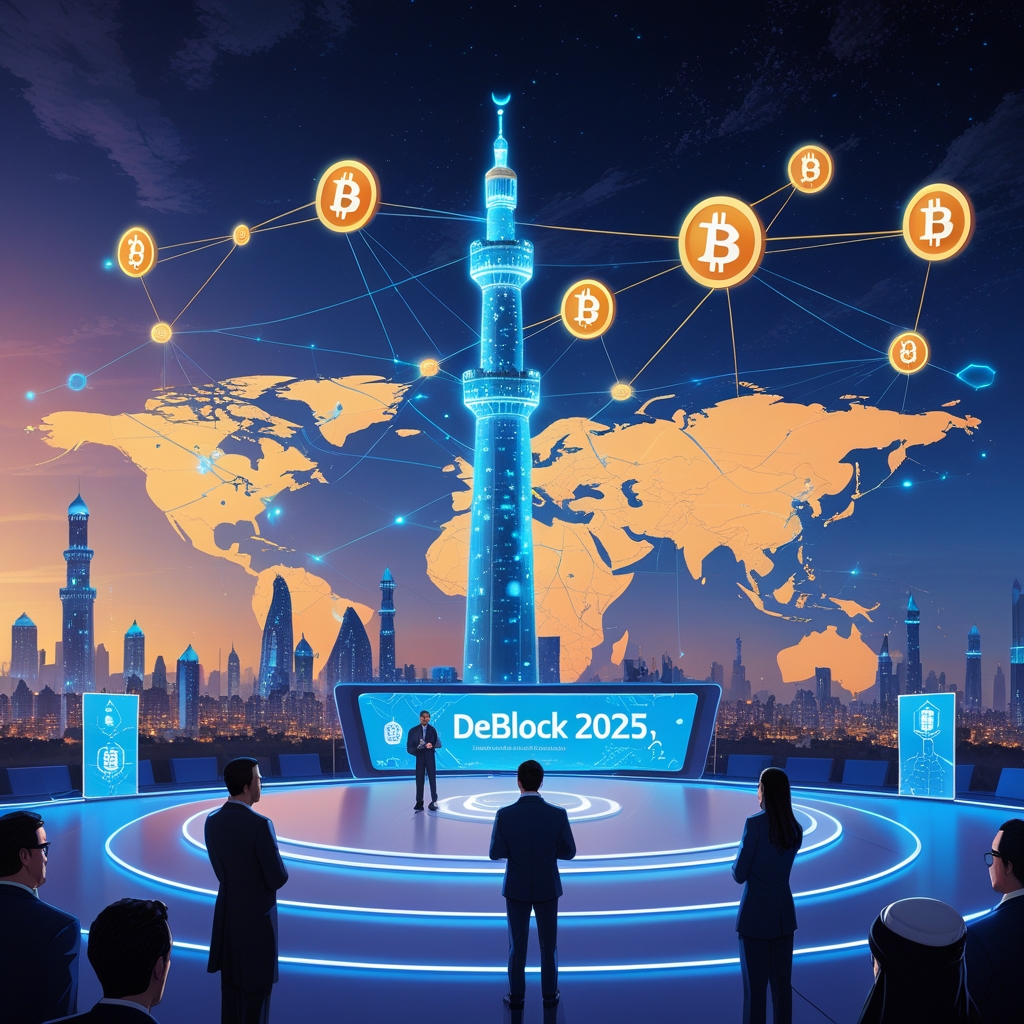
At its first international blockchain event — the deBlock 2025 Forum — Iran has made one of its most decisive statements yet about the future of its digital economy: the nation intends to become a regional crypto hub. With a growing recognition of blockchain technology’s potential to transform finance, trade, and industry, Tehran is signaling a significant policy shift — one that may reshape not only its domestic economy but also its role in the evolving global financial order.
A Turning Point for Iran’s Digital Economy
For decades, Iran has struggled under the weight of financial restrictions, sanctions, and a dependence on traditional systems of trade and banking. Now, however, the country is exploring a radically different path — one built on decentralized technologies and digital currencies.
During the deBlock 2025 Forum, which brought together government officials, crypto entrepreneurs, economists, regulators, and diplomats, the message from Tehran was clear: the future of Iran’s economy cannot be achieved without embracing crypto assets.
In a speech read on behalf of the Speaker of Parliament, Mohammad Bagher Ghalibaf, officials underscored the urgency of establishing a national roadmap for crypto regulation. Describing this effort as an “undeniable imperative,” Ghalibaf argued that digital assets must play a central role in Iran’s economic modernization.
Iran’s latest National Development Plan aims to increase the share of the digital economy to 10% of total GDP. But as Ghalibaf emphasized, “achieving this goal is impossible without crypto assets.”
From Caution to Commitment
Iran’s stance on cryptocurrencies has evolved dramatically. Initially viewed as a threat to financial stability and a potential tool for money laundering, crypto was once outright banned by the Anti-Money Laundering Headquarters. But as Shamseddin Hosseini, chairman of the parliamentary economic committee, noted during the conference, the government’s perspective has since shifted.
“The first encounter with virtual currencies was one of fear and prohibition,” he said. “But the Supreme Council of Cyberspace countered that approach — and now, we recognize the necessity of crypto for our economic growth.”
This marks a fundamental policy transformation: from restriction to regulation, from skepticism to strategy.
Building a Regional Crypto Hub
Iran’s ambitions extend far beyond domestic adoption. The government envisions becoming a regional leader in blockchain and digital assets, setting global standards while deepening cooperation with emerging markets.
By implementing internationally aligned crypto regulations and fostering a transparent digital financial ecosystem, Iran aims to attract investment and technological expertise. Ghalibaf elaborated:
“The Islamic Republic can become a successful model in the region and be recognized as a regional hub for crypto assets. The perspective on crypto should not be limited solely to mining or trading — we need a comprehensive crypto-based financial ecosystem.”
Such an ecosystem, he explained, includes:
-
Secure and regulated trading platforms
-
Crypto-based cross-border trade mechanisms
-
Tokenization of real-world assets such as securities and commodities
These initiatives could position Iran as a bridge between BRICS nations and Middle Eastern markets — especially as blockchain adoption accelerates across developing economies.
Global Collaboration and Strategic Partnerships
The deBlock 2025 Forum also marked a milestone in Iran’s international crypto outreach. A memorandum of understanding (MoU) was signed between deBlock and Trescon Global, the Dubai-based organizer of global tech events like the World Blockchain Summit. This partnership will allow future editions of Iran’s blockchain conference to be hosted in Dubai, expanding its international visibility and participation.
According to Reza Soltani, deBlock’s executive director:
“Iran has the potential to become the regional hub for decentralized technologies. Our collaboration with Trescon can attract foreign investment, enhance international credibility, and expand technological partnerships with BRICS countries.”
Delegations from over 15 countries, including BRICS and Central Asian representatives, attended the forum in Tehran’s IRIB International Conference Center on November 6–7, highlighting the nation’s growing diplomatic engagement through the blockchain lens.
Crypto as a Tool for Economic Sovereignty
Beyond innovation and growth, Iran views cryptocurrency as a strategic instrument for financial independence — particularly in the face of international sanctions and restricted access to global banking systems.
Ghalibaf noted that the use of shared cryptocurrencies within frameworks such as BRICS-Plus could strengthen economic resilience and facilitate trade without reliance on Western-dominated financial networks:
“The use of shared cryptocurrencies within bilateral or multilateral monetary agreements can help strengthen economic independence and facilitate international transactions.”
This aligns with a broader geopolitical trend among BRICS nations — including Russia, China, and Brazil — which are exploring blockchain-based settlement systems as alternatives to the U.S. dollar.
The Road Ahead
Iran’s vision is ambitious — and not without challenges. Regulatory clarity, infrastructure development, and international trust will be crucial if the country hopes to realize its goal of becoming a crypto hub. Moreover, balancing innovation with compliance, particularly in an economy facing external pressures, will test Tehran’s policy consistency.
Yet the direction is clear: crypto is no longer an experiment for Iran — it’s a strategic necessity.
By embracing blockchain and digital assets, Iran is not merely seeking to modernize its economy; it is attempting to redefine its place in a rapidly decentralizing world order. If successful, it could emerge as a key player in shaping the global “Internet of Value” — where money, trade, and innovation move without borders.
In short: Iran’s blockchain awakening marks a bold step toward economic sovereignty, regional leadership, and a digital future built on decentralized foundations.
Ready to start your cryptocurrency journey?
If you’re interested in exploring the world of crypto trading, here are some trusted platforms where you can create an account:
- Binance – The world’s largest cryptocurrency exchange by volume.
- Bybit – A top choice for derivatives trading with an intuitive interface.
- OKX – A comprehensive platform featuring spot, futures, DeFi, and a powerful Web3 wallet.
- KuCoin – Known for its vast selection of altcoins and user-friendly mobile app.
These platforms offer innovative features and a secure environment for trading and learning about cryptocurrencies. Join today and start exploring the opportunities in this exciting space!
 Want to stay updated with the latest insights and discussions on cryptocurrency?
Join our crypto community for news, discussions, and market updates: CryptoBCC on Youtube | Telegram | Facebook | Discord | X(Twitter)
 For collaborations and inquiries: CryptoBCC.com@gmail.com
Disclaimer: This is not investment advice. Cryptocurrency investments carry high risk. Always conduct your own research.