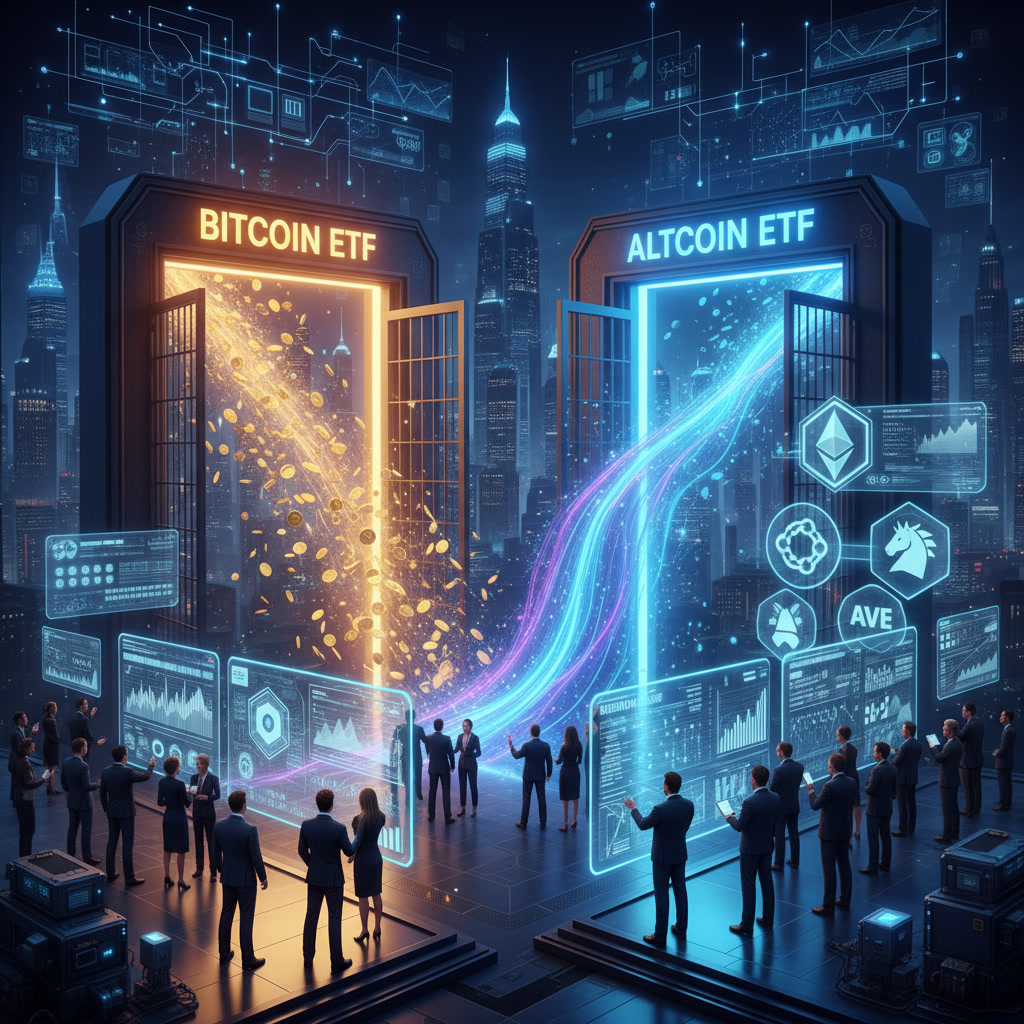
In the latest developments within the cryptocurrency markets, analysts are pointing toward a potential pivot: institutional investors may soon redirect their attention from the flagship Bitcoin (BTC) toward a broader array of altcoins — all driven by the emergence of altcoin-focused exchange-traded funds (ETFs).
Here’s a breakdown of what this could mean, why it’s happening, and what risks to keep in mind.
Why Altcoin ETFs Could Become a Big Deal
First, some context: institutional investors have poured into Bitcoin via ETFs, helping to legitimize the asset class and bring in large-scale capital. The idea now is that altcoins might be next in line. According to the article:
-
The U.S. Securities and Exchange Commission (SEC) has received at least five registration filings for altcoin ETFs during the first half of October, despite governmental delays.
-
Analyst Leon Waidmann (Director of Research at a Web3 analytics firm) says: “Every new approval will open the door to the next wave of institutional buying. Capital flow into altcoin ETFs is a natural extension of the success of Bitcoin and Ethereum ETFs in drawing institutional interest.”
-
Data cited show that in Q3 2025, spot Ethereum-based ETFs attracted about US$9.6 billion, surpassing the US$8.7 billion directed into spot Bitcoin ETFs.
-
On-chain analytics firm Nansen identifies that smart-money wallets are heavily holding tokens like Uniswap (UNI), Aave (AAVE) and Chainlink (LINK) in anticipation of institutional altcoin exposure.
In short: institutional money is looking for structured ways (ETFs) to access altcoins, beyond Bitcoin. The pipeline of ETF applications and on-chain behaviour suggests this might be underway.
What Could This Shift Mean
If institutional capital indeed moves into altcoins via ETFs, several consequences may follow:
-
Broader market adoption
A wave of altcoin ETFs would provide institutions with regulated, familiar instruments for exposure—reducing friction compared to direct token purchases from exchanges. That could increase legitimacy and inflows into alt-sectors. -
Capital redistribution
With some of the money that previously focused on Bitcoin possibly shifting to altcoins, we could see changes in market leadership—smaller-cap altcoins might gain more attention and capital flows. -
Reduced volatility (possibly)
ETFs tend to bring more stable, institutional capital than retail speculation. If altcoins become accessible via ETFs, the hope is that some of the extreme volatility could moderate—though this is not guaranteed. -
Regulatory and structural clarity
The approval of altcoin ETFs would signal regulatory acceptance of more than just Bitcoin and Ethereum. That could open doors for new fund structures, more custodians, and expanded institutional infrastructure.
But Let’s Be Clear About the Risks & Conditions
This potential shift is not guaranteed, and several caveats apply:
-
Presence of major asset-managers matters
The article highlights a concern that the absence of major players like BlackRock, Inc. in altcoin ETF filings may limit the scale of incoming capital. BlackRock’s Bitcoin ETF attracted ~US$28.1 billion this year, making it a major driver. Without similar involvement, altcoin ETFs may see muted flows. -
Approval timeline is uncertain
Filing does not equal approval. Regulatory delays, evolving rules, and government shutdowns (as referenced) could slow the rollout. -
Altcoin-specific risks persist
Even with an ETF wrapper, altcoins carry higher risk: lower liquidity, less mature networks, governance issues, and weaker track records compared to Bitcoin. If something goes wrong (technical failure, regulatory crackdown, token economics issues) the downside might be substantial. -
Valuation and market timing
Just because institutions can access altcoins doesn’t mean they should—valuations may be frothy, and competition within altcoin ecosystems is intense. Institutions may proceed cautiously, delaying major commitments.
Looking Ahead: What to Watch
To stay on top of whether this shift is happening and how meaningful it could be, watch for these markers:
-
ETF filings and approvals: Track when altcoin-focused ETFs receive regulatory green lights, who the sponsors are, and the size of any launches.
-
Institutional inflows: Compare capital flows into altcoin ETFs (once available) versus Bitcoin and Ethereum ETFs. A significant inflection point would be notable.
-
On-chain behaviour: Look at whether smart-money wallets continue accumulating altcoins, and whether large retailers/institutions follow.
-
Asset-manager participation: If major asset-managers (BlackRock, Fidelity, etc) join the altcoin ETF space, that would be an important credibility signal.
-
Performance and volatility: Observe how altcoins behave once institutional flows increase—do they see more stability? Do they diverge from Bitcoin’s patterns?
-
Regulatory environment: Monitor changes in regulation across jurisdictions for crypto assets, ETFs, custodianship and how altcoin classification evolves.
Final Thoughts
The idea that the next major wave of institutional money in crypto will go beyond Bitcoin and Ethereum is compelling. The entrance of altcoin ETFs could mark a significant maturation point for the crypto ecosystem—moving from niche/trading-oriented flows toward mainstream investment vehicles.
However, as with all things in crypto: the promise comes with risks. Institutions may move slowly, regulatory surprises may intervene, and altcoin complexity remains high. For any investor or observer, this means staying informed, watching structural developments (not just price action), and treating the scenario as one possible path—not a guarantee.
In essence: if altcoin ETFs are approved and launched, they could catalyze a meaningful institutional pivot into altcoins—but the magnitude and timing remain open questions.
Ready to start your cryptocurrency journey?
If you’re interested in exploring the world of crypto trading, here are some trusted platforms where you can create an account:
- Binance – The world’s largest cryptocurrency exchange by volume.
- Bybit – A top choice for derivatives trading with an intuitive interface.
- OKX – A comprehensive platform featuring spot, futures, DeFi, and a powerful Web3 wallet.
- KuCoin – Known for its vast selection of altcoins and user-friendly mobile app.
These platforms offer innovative features and a secure environment for trading and learning about cryptocurrencies. Join today and start exploring the opportunities in this exciting space!
 Want to stay updated with the latest insights and discussions on cryptocurrency?
Join our crypto community for news, discussions, and market updates: CryptoBCC on Telegram.
 For collaborations and inquiries: CryptoBCC.com@gmail.com
Disclaimer: Always do your own research (DYOR) and ensure you understand the risks before making any financial decisions.